
The skincare industry is undergoing a profound transformation, moving beyond traditional botanical extracts and synthetic chemicals toward a new era powered by biotechnology. This scientific revolution involves harnessing living organisms—such as bacteria, yeast, or algae—and their biological processes to create highly potent, pure, and sustainable ingredients in a controlled laboratory setting. At the heart of this movement are lab-grown ingredients and peptides, which are redefining efficacy, ethical sourcing, and environmental responsibility in beauty.
Biotech in Skincare: The Rise of Lab-Grown Ingredients and Peptides
I. What is Biotech Skincare?
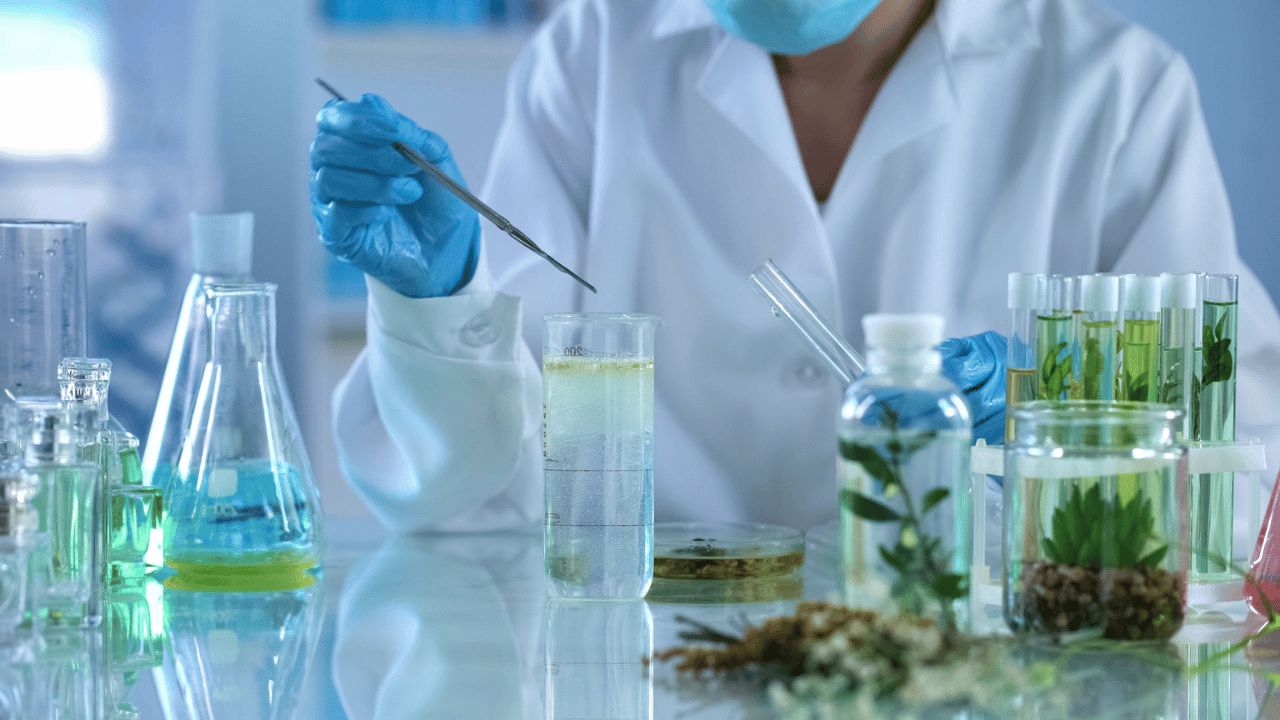
Biotech skincare, or “bio-beauty,” represents the pinnacle of cosmetic science, combining biological innovation with manufacturing precision. It’s a method of ingredient production that leverages processes like fermentation, plant cell culture, and bioengineering to produce molecules identical to those found in nature, but in a more controlled, clean, and sustainable way.
Moving Beyond Traditional Sourcing
Historically, active ingredients were often derived from either traditional chemical synthesis or intensive farming and extraction of natural resources.
- Traditional Naturals: Although appealing, the potency of natural extracts can vary significantly due to environmental factors such as soil quality, climate, and season. Furthermore, high demand can lead to over-harvesting, contributing to biodiversity loss and high water consumption.
- Synthetic Skincare: While effective, some synthetic ingredients have faced consumer scrutiny over long-term safety and the reliance on petrochemicals.
Biotech skincare offers a powerful middle ground, mimicking nature’s blueprint without depleting its resources. It delivers the consistent potency of a lab-created molecule with the biological compatibility of a natural one.
II. The Benefits of Lab-Grown Ingredients
The shift to lab-grown ingredients is driven by three core advantages: sustainability, purity and consistency, and advanced efficacy.
A. Sustainability and Ethical Sourcing
Biotechnology provides solutions to the environmental and ethical challenges of traditional ingredient sourcing.
- Reduced Environmental Footprint: Ingredients are grown in controlled bioreactors, significantly reducing the need for vast tracts of land, large amounts of water, and pesticides associated with traditional agriculture. For instance, biotech production of ingredients like squalane (a moisturizing oil) can eliminate the need to harvest it from shark liver or strain plant-based sources like olives.
- Biodiversity Preservation: By producing compounds in the lab, there is no reliance on endangered or over-harvested plant species, protecting natural ecosystems.
- Vegan and Cruelty-Free Alternatives: Biotechnology allows for the creation of vegan-friendly, bio-identical versions of ingredients traditionally sourced from animals, such as animal-derived collagen or hyaluronic acid (HA). Today, most HA is produced through microbial fermentation.
B. Purity, Consistency, and Stability
Ingredients grown in a lab are subject to rigorous quality control, resulting in unparalleled quality.
- Higher Purity: The controlled environment ensures the resulting molecules are free from contaminants, pesticides, or allergens often found in naturally sourced materials.
- Consistent Potency: Unlike plant extracts, which can fluctuate in composition, biotech ingredients like bio-fermented extracts or engineered peptides offer uniform concentration and activity, ensuring predictable performance in a skincare product batch after batch.
- Enhanced Stability: Biotechnology often results in more stable formulations, leading to longer shelf lives and less degradation of the active compound before it reaches the skin.
C. Examples of Lab-Grown Skincare Staples
Beyond peptides, numerous staple skincare ingredients are now produced using biotechnology:
- Hyaluronic Acid (HA): Mass-produced via microbial fermentation, offering a sustainable, high-purity, and vegan alternative to older animal-derived sources.
- Squalane: Often derived from the fermentation of sugarcane with yeast, providing a highly stable, non-comedogenic emollient.
- Vitamins (e.g., Vitamin C derivatives): Bio-fermentation is used to create highly stable, high-purity forms of vitamins that are less prone to oxidation.
- Growth Factors: Lab-created, bio-identical proteins that mimic the body’s natural signaling molecules to promote cell renewal and wound healing.
III. The Power of Peptides in Cosmetic Chemistry
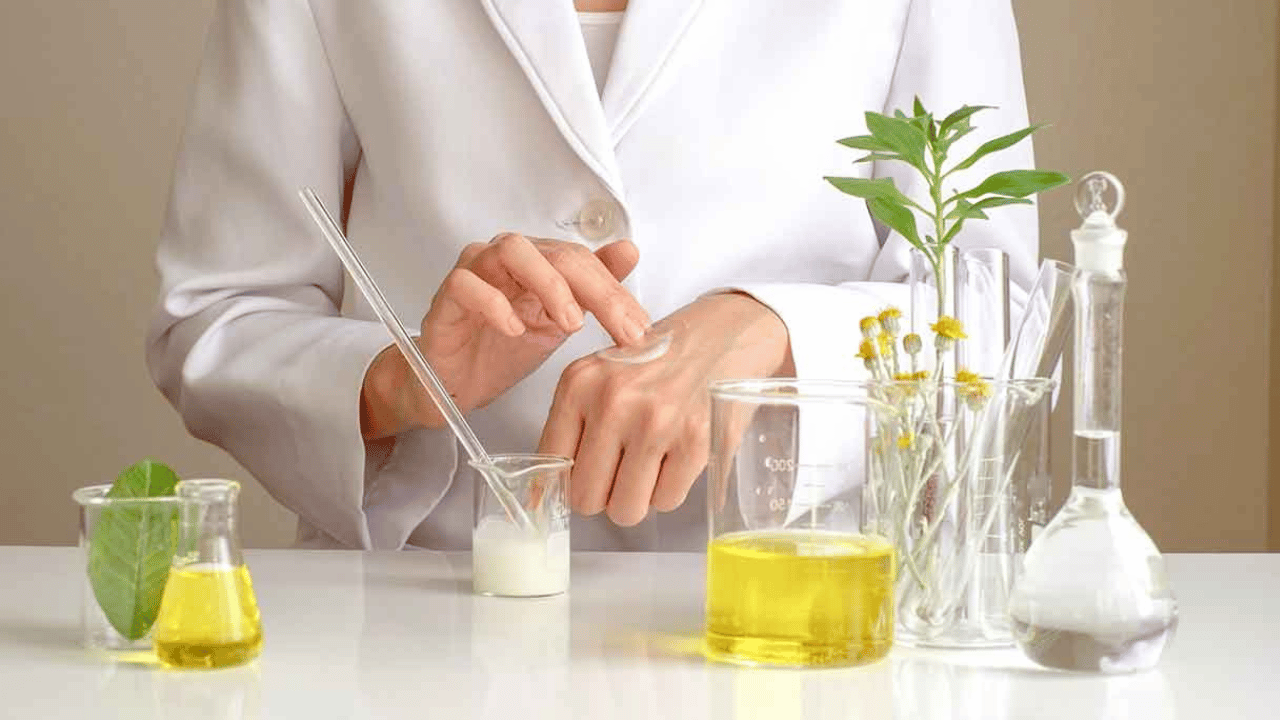
Peptides are arguably the most celebrated biotech innovation in skincare. They are short chains of amino acids—the building blocks of proteins like collagen and elastin—linked by peptide bonds. They function as cellular messengers, signaling the skin to perform specific actions, such as repair, regeneration, or collagen production. Because of their small size, they can penetrate the skin barrier more effectively than larger protein molecules like intact collagen.
Classification and Function of Peptides
Peptides are generally classified into four main categories based on their mechanism of action:
1. Signal Peptides
- Mechanism of Action: Stimulate fibroblasts (skin cells) to increase the production of structural proteins like collagen, elastin, and glycosaminoglycans (e.g., Hyaluronic Acid).
- Cosmetic Benefit: Improve skin firmness and elasticity; reduce the appearance of fine lines and wrinkles.
- Common Examples: Palmitoyl Tripeptide-5, Palmitoyl Pentapeptide-4 (Matrixyl™)
2. Carrier Peptides
- Mechanism of Action: Deliver essential trace elements, like Copper and Manganese, to skin cells. These elements are cofactors in enzyme processes critical for wound healing and collagen synthesis.
- Cosmetic Benefit: Supports wound repair, reduces inflammation, and enhances the overall health of the skin matrix.
- Common Examples: Copper Tripeptide-1 (GHK-Cu)
3. Neurotransmitter-Inhibiting Peptides
- Mechanism of Action: Temporarily blocks the release of neurotransmitters that tell facial muscles to contract. They offer a topical, non-injectable alternative to reduce the appearance of expression wrinkles.
- Cosmetic Benefit: Soften expression lines, such as crow’s feet and forehead furrows.
- Common Examples: Acetyl Hexapeptide-8 (Argireline™), Pentapeptide-18 (Leuphasyl™)
4. Enzyme-Inhibitor Peptides
- Mechanism of Action: Blocks the activity of enzymes that break down essential skin components (like matrix metalloproteinases, or MMPs, which degrade collagen) or those involved in pigmentation (like tyrosinase).
- Cosmetic Benefit: Protect existing collagen from degradation; potentially brighten skin tone by inhibiting melanin synthesis.
- Common Examples: Tripeptide-1 (prevents collagen degradation), Rice/Soy Peptides (to reduce dark circles)
Conclusion: The Future of Biotech Skincare
The integration of biotechnology with skincare is only accelerating. The future will likely see even more precise, personalized, and environmentally conscious products.
A. Precision Formulation
Future innovations are focusing on bio-identical and proprietary ingredients engineered for ultimate precision. Scientists are creating molecules that are an exact match for the ones naturally found in youthful skin, allowing for highly targeted anti-aging and repair.
B. Microbiome and Cellular Health
Biotech is paving the way for advanced probiotics and postbiotics that support the skin’s complex microbiome—the community of microorganisms on the skin’s surface. A balanced microbiome is essential for a strong skin barrier and reduced sensitivity. Furthermore, ingredients like exosomes—tiny messenger vesicles released by cells—are being studied for their powerful ability to instruct skin cells to repair and regenerate, marking a significant step toward true cellular-level skincare.
C. Challenges and Consumer Perception
Despite the scientific advantages, biotech skincare faces the challenge of consumer perception. The term “lab-grown” can sometimes be confused with “synthetic” or “unnatural.” The industry is actively working to bridge this communication gap, positioning biotechnology not as a rejection of nature, but as a sustainable and innovative extension of it, proving that the most effective and ethical beauty is often born where science meets biology.
By embracing lab-grown ingredients and precision-engineered peptides, the skincare industry is not just enhancing product efficacy; it’s championing a more responsible, potent, and ultimately, healthier future for both our skin and the planet.
Have any questions? We’d love to hear from you!













Leave a Reply