Table of Contents
Here at Healthy Skin, nestled in the heart of Phuket Town, we believe true wellness begins when health, nature, and humanity are in balance. For our community of residents and discerning visitors, proper tropical climate care is essential for maintaining skin vitality. Unwanted moles can be a source of self-consciousness, detracting from the natural confidence that comes with healthy, clear skin. Considering laser mole removal is a step towards that clarity. This modern, non-invasive technique aligns with our philosophy of using advanced technology to enhance natural beauty with minimal intervention. This guide will walk you through what to expect from this safe, sophisticated procedure, ensuring your journey to radiant skin is as serene and informed as our island home.
Understanding the Laser Approach to Clearer Skin
Laser mole removal is a precise, non-invasive cosmetic procedure designed to address benign moles on the face and body. Unlike traditional surgical excision, which requires cutting and stitches, this advanced method uses concentrated beams of light energy. The laser targets the melanin, or pigment, within the mole cells, causing the pigment to break down and be naturally absorbed by the body. The energy is delivered in short, controlled pulses, allowing our practitioners to work with exceptional accuracy, treating only the mole itself without affecting the surrounding healthy tissue. This precision significantly reduces the risk of scarring and makes the procedure an excellent choice for visible areas like the face. The process is typically quick, comfortable, and requires minimal downtime, making it a convenient and effective option for achieving smoother, more even-toned skin. It is a testament to how modern technology can work in harmony with the body’s natural healing processes.
Your Personalized Consultation: The First Step to Safety
Your journey with us always begins with a thorough and personalized consultation. This essential meeting is the cornerstone of a safe and effective treatment plan. During this session, one of our experienced skin specialists will conduct a detailed assessment of your skin and the specific mole or moles you wish to address. We will discuss your aesthetic goals, review your cosmetic history, and answer any questions you may have. A critical part of this evaluation is determining if your mole is a suitable candidate for laser removal. We only treat moles that are confirmed to be benign. For any lesion that appears suspicious, we will refer you for a dermatological opinion. This commitment to your health and safety is our highest priority. Once we confirm you are a good candidate, we will create a bespoke treatment plan, outlining the expected number of sessions, pre-treatment preparations, and a comprehensive aftercare regimen tailored to your skin’s needs.

The Procedure Itself: A Step-by-Step Breakdown
On the day of your appointment, the process is straightforward and designed for your comfort. It begins with the thorough cleansing of the targeted mole and the surrounding skin to ensure a sterile environment. Following this, a powerful topical anesthetic cream is applied directly to the mole. This cream is left to take effect for about 30 to 60 minutes, effectively numbing the surface layers of the skin to minimize any discomfort during the treatment. Once the area is numb, both you and your practitioner will be given protective eyewear as a crucial safety measure against the laser light. Your dermatologist will then use a specialized handheld laser device, such as a CO2 or Erbium laser, which is precisely calibrated for your skin type and the mole’s characteristics. The laser delivers concentrated pulses of light energy that are absorbed by the pigment in the mole, causing the cells to vaporize layer by layer without damaging the surrounding tissue. The actual laser application is remarkably quick, often taking only a few minutes per mole. You might notice a faint charring smell, which is a normal part of the tissue ablation process. Immediately after, a soothing, antibacterial ointment and sometimes a small sterile dressing are applied to the area to protect it as the healing begins.
Sensation and Comfort: What Does It Feel Like?
One of the most common questions clients have revolves around pain: does laser mole removal hurt? Thanks to the topical anesthetic applied beforehand, the procedure is generally considered to be very tolerable. Most people do not describe the sensation as painful, but rather as a series of quick, hot pricks against the skin. The feeling is frequently compared to a small rubber band being snapped lightly on the surface. For a brief moment, you will feel a zapping sensation as the laser pulse is delivered, but it subsides almost instantly. Some may find the sound of the laser or the slight odor of vaporization more noticeable than the physical sensation itself. Throughout the short process, your dermatologist will communicate with you, ensuring you remain comfortable. Advanced dermatology beauty centers often use lasers with integrated cooling systems, which blow cold air onto the skin simultaneously with the laser pulse, further enhancing comfort. After the treatment is complete, the numbing cream will wear off over the next hour or two. You can expect the treated area to feel warm, similar to a very mild sunburn, and it may appear slightly red or swollen for a few hours. This initial sensitivity is normal and typically resolves quickly on its own.
Immediate Aftercare and the Healing Journey
Proper aftercare is fundamental to achieving the best possible outcome and preventing complications like infection or scarring. Immediately following the procedure, the treated spot will look like a small, flat abrasion, which may be slightly red or white. Within the first 24 to 48 hours, a protective dark scab or crust will form over the area. This is a natural part of the healing process, and it is absolutely essential that you do not pick, scratch, or scrub it off. The scab acts as a natural bandage, protecting the delicate new skin regenerating underneath. Your main job is to keep the area clean and follow your dermatologist’s instructions, which typically involve applying a prescribed antibiotic or healing ointment two to three times a day. This helps to keep the tissue hydrated and protected from bacteria. For those of us managing skin in Thailand’s humidity, it is particularly important to prevent the area from remaining constantly damp, as this can slow healing. Your specialist will give you advice tailored to this climate. The scab will usually fall off on its own in about 7 to 14 days, revealing fresh, pinkish new skin. This new skin is very sensitive, so protecting it from the sun with a high-SPF sunscreen is non-negotiable to prevent hyperpigmentation.
Aftercare: Ensuring a Smooth Healing Process
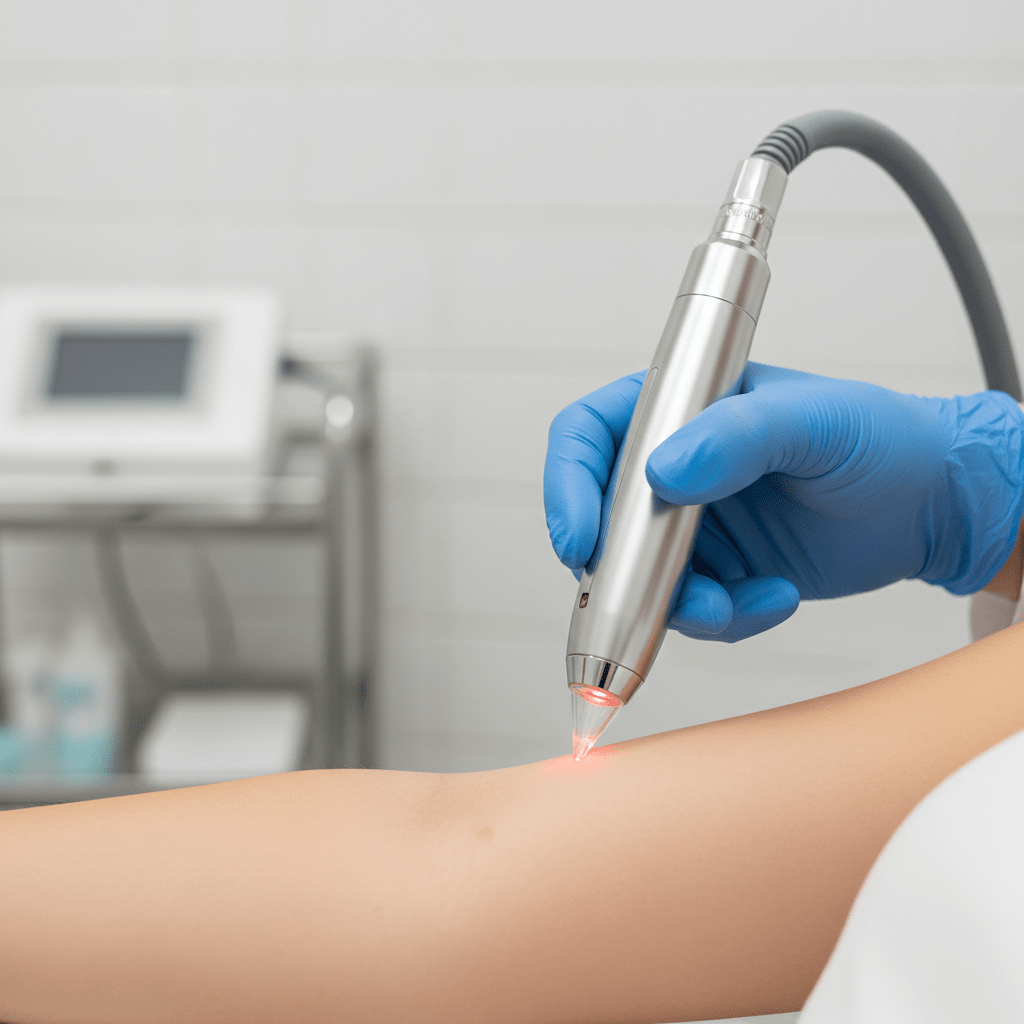
Proper aftercare is just as important as the procedure itself for achieving the best results from your laser mole removal. Immediately following the treatment, the area may appear slightly red or feel like a mild sunburn, but this usually subsides within a few hours.
A small scab will typically form over the treated spot within 24 to 48 hours. It is crucial that you do not pick, scratch, or scrub this scab. Let it heal and fall off on its own, which usually happens within one to two weeks. Your practitioner will give you specific instructions, which may include applying a prescribed antibiotic ointment to prevent infection and keeping the area clean with a gentle cleanser.
Sun protection is absolutely essential. The new skin that emerges after the scab falls off is very sensitive to UV radiation. Diligently applying a broad-spectrum sunscreen with an SPF of 30 or higher will help prevent hyperpigmentation and ensure the skin heals to match its surrounding tone.
Conclusion
Choosing to remove a mole is a personal decision, and modern dermatology offers incredible options. Laser mole removal stands out as a minimally invasive, effective, and safe procedure for appropriate candidates, leaving behind little to no scarring. The key to a successful outcome is professional guidance. A thorough consultation with a qualified dermatologist ensures the mole is benign and that this treatment is the right path for your specific skin needs. By understanding the process, from the initial consultation to the simple aftercare routine, you can feel confident and empowered in your journey toward clearer, healthier-looking skin. Your peace of mind is the most important part of any cosmetic procedure.
Ready to learn more about your options for clear, healthy skin?